As an industry, it seems to me that we have spent too much time asking, “How do we get communities to understand data centres?”
I think the better question is, “How do we become a valued part of the communities we operate in?” Because if you’re building infrastructure that will be part of a town or city for decades to come, simply gaining planning permission isn’t enough. You have to earn trust. You have to contribute. And above all, you have to become a good corporate neighbour.
At Kao Data, that’s something we’ve believed for a long time.
Being community-centric isn’t a corporate responsibility programme or a marketing campaign. It’s a philosophy that influences how we think about every location where we build and operate. We don’t see our communities as stakeholders to engage with when we need something. We see them as long-term partners whose success is intrinsically linked to our own.
That’s why our approach has never been about parachuting in with a one-off donation or a photo opportunity. It’s about building genuine, collaborative relationships that continue long after the ribbon has been cut.
One of the clearest examples of this is the Kao SEED Fund.
When we created the fund, the ambition was simple: empower the people who already know their communities best. Rather than deciding where support should go, we wanted to invest in local organisations already delivering extraordinary work—whether that’s creating greener spaces, tackling social challenges, supporting enterprise or bringing people together.
The response exceeded anything we expected.
Today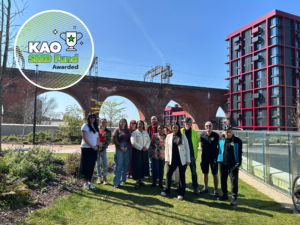 , the Kao SEED Fund operates across both Stockport and Harlow, with each location benefiting from a dedicated biennial funding pot that supports grassroots organisations delivering meaningful social, environmental and economic impact. Across the two programmes, dozens of community groups have received not only financial backing, but also mentorship, employee volunteering and ongoing support from the Kao Data team. Working alongside trusted local partners, the fund empowers the organisations that know their communities best, ensuring every investment creates lasting value where it matters most.
More importantly, those projects weren’t chosen by people sitting behind desks hundreds of miles away. They were selected with the help of trusted local partners and supported by Kao Data employees who continue to volunteer their time and expertise alongside the organisations we fund.
That is what meaningful partnership looks like.
It’s incredibly rewarding that this approach has now been recognised by our peers, with the Kao SEED Fund receiving both a DataCloud Global Award and a DCS Award. While we’re enormously proud of that recognition, the awards aren’t the achievement that matters most.
The real achievement is seeing local organisations grow in confidence, seeing communities take ownership of ideas that improve the places where they live, and knowing that we’ve played a small part in helping those ideas become reality.
I believe our industry has an enormous opportunity.
Data centres are becoming some of the UK’s most important pieces of critical infrastructure. They will underpin AI, economic growth and the digital services society increasingly depends upon. But with that importance comes responsibility.
Our legacy shouldn’t only be measured in megawatt deployments. It should be measured by whether we’ve created opportunities for young people through education. Whether we’ve helped local charities reach more people. Whether we’ve strengthened community organisations. Whether we’ve left a place better than we found it.
At Kao Data, our community work extends well beyond the Kao SEED Fund—from inspiring the next generation through the KAO Academy, to celebrating women in digital infrastructure through our Critical Careers programme, to supporting our own people so they can make a positive difference both inside and outside our business.
They’re all driven by the same belief: digital infrastructure should create social infrastructure too.
As our industry continues to grow, I’d like to see community impact become as fundamental to data centre development as sustainability, resilience and innovation.
Essentially, the most successful data centres won’t simply be the ones that power the future – They’ll be the ones that help their communities thrive alongside it.
For more information on our Community Impact Strategy – please click here to access our report.