

Encouraging STEM will promote a greater understanding of data centres’ role in society

When people ask me what I do, or what Kao Data does, I’ve often previously felt a bit like Chandler from Friends who had a job that no one really understood. What on earth is a data centre? For most of my friends it has always ended in a long and convoluted discussion about hosting […]
How AI can be an ally for the automotive industry

Today AI has disrupted many of the traditional manufacturing industries, with some of the fastest changes taking place within automotive, where GPU-accelerated technologies have replaced century-old working practices. Right now, every aspect of the business is being transformed, from logistics and supply chain management, to design and testing, and sales and after-service. Moreover, as autonomous […]
How data centres are shaping the future of gaming, in Cambridge and beyond

According to Kareem Choudhry, Corporate Vice President of Cloud Gaming at Microsoft, over 25% of the world’s population are gamers. And that was before this previously deemed “niche market” surged to an estimated $160 billion sector in 2021 following the global lockdown. Not only has the number of gamers rocketed, but gamer demographics have also […]
Data centres and the UK government’s National Planning Policy Framework

At the start of this year I was invited to join a panel at the Built Environment Networking event, Data Centres – Supporting Digital Connectivity, where I was fortunate to share the platform with Emma Fryer, our industry’s very own champion of all things data centre at techUK, Paula Flannery from Procore and David Watkins […]
HPC and AI makes genomic research feasible at population level

Given Kao Data’s first of three data centre campuses is located in the heart of the UK Innovation Corridor – a hotbed for bioinformatics and life sciences, we are regularly involved in discussions revolving around the latest advancements in this field of work. Thanks to advances in next-generation sequencing technologies (NGS), genomic research is thriving […]
Why ‘Incident Reporting’ is crucial to the data centre industry

As I suspect was the case for many people, I had a particularly rare and peaceful Monday evening a couple of weeks ago! For about 6 hours, all the phones in my busy household just sat there dormant, not a ping or notification to be heard of. Even an outage as large as the one […]
A National Strategy to boost AI

Every so often, I stop and think about how rapidly change occurs around us. Looking back even just 10 years ago, something like high performance computing (HPC) was primarily the realm of research and academics. Today, artificial intelligence (AI) powered by GPUs and DGX hardware is seen by many as an engine of productivity and […]
Cambridge-1: Building bridges between AI, academia and the future of healthcare
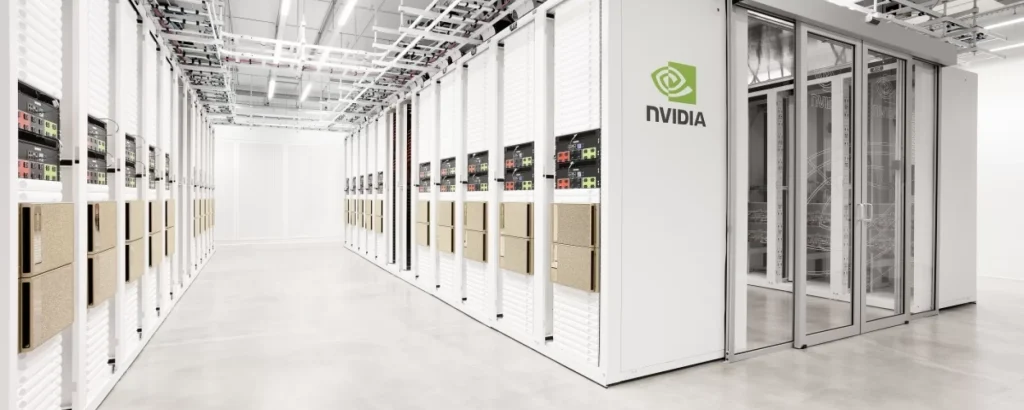
Last month we were delighted to host guests from AstraZeneca, GSK, Oxford Nanopore, King’s College London, and Guy’s and St Thomas’ NHS Foundation Trust, as NVIDIA officially launched Cambridge-1, the UK’s most powerful supercomputer, dedicated to digital biology, bioinformatics and genomics research. This supercomputer will be transformative for the healthcare industry globally, being used to […]
Turbo-charging the engine of innovation in Cambridge

Three years ago, 99.3% of all private sector businesses in the UK were small businesses. Dubbed the “backbone of the economy” these startups generated a combined annual turnover of £2 trillion and accounted for 60% of all private sector employment. Last year, according to a recent report by the Centre for Entrepreneurs, and despite the […]
Using CFD analysis to design and build the UK Innovation Corridor’s home for HPC and AI

Precision Engineered for HPC and AI Kao Data launched Kao Data London One (KDL1) in 2018. As the UK’s first 100% wholesale multi-tenant data centre to provide 100% free-cooling, the campus is designed to deliver cutting edge and energy efficient colocation services for high performance computing (HPC) artificial intelligence (AI) and enterprise organisations. It offers […]